

Invisalign in Birmingham, MI
Crooked, crowded, or unevenly spaced teeth can affect more than the appearance of your smile. They may also make certain areas harder to brush and floss or change how your teeth meet when you bite. Invisalign® uses a series of clear, removable aligners to move teeth gradually without metal brackets and wires.
Each aligner plan follows a digitally mapped sequence based on the patient’s tooth positions, bite, oral health, and intended changes. The trays fit closely over the teeth and can be taken out for meals, brushing, and flossing, making them a discreet and convenient option for many adults and teens.
Patients considering Invisalign in Birmingham, MI, can meet with Dr. Mitchell Milan at Birmingham Center for Cosmetic Dentistry. As an early Invisalign provider, Dr. Milan has guided hundreds of patients through clear aligner care. He evaluates how alignment relates to the entire smile, including tooth proportions, facial features, existing dental work, and cosmetic goals.

What Is Invisalign?
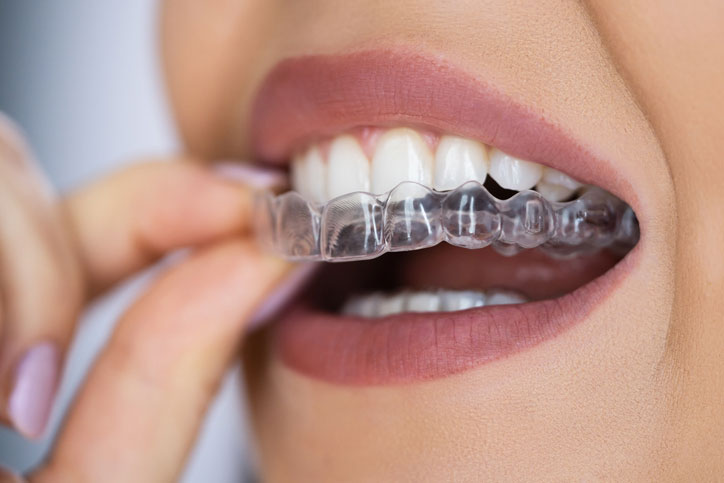
Invisalign® is an orthodontic system that moves teeth with a sequence of transparent, custom-made aligners. Each aligner places controlled pressure on selected teeth. As you progress through the series, your teeth move closer to their planned positions.
The aligners contain no metal brackets or wires. You can take them out for meals, brushing, and flossing, then place them back over your teeth. They are designed to remain in your mouth for most of the day, so consistent wear is central to keeping your plan on schedule.
Invisalign may address several alignment and bite concerns, including:
- Crowded or overlapping teeth
- Gaps between teeth
- Crooked or rotated teeth
- Teeth that shifted after previous orthodontic care
- Certain overbites, underbites, crossbites, and open bites
Clear aligners are not appropriate for every orthodontic concern. Tooth and gum health, the complexity of the required movements, and your ability to wear the aligners as directed all influence candidacy. The dentist will examine your smile before recommending Invisalign or discussing another approach.

Who May Be a Candidate for Invisalign?
Adults and teens with healthy teeth and gums may be considered for Invisalign. It can be particularly appealing to professionals, students, performers, and others who prefer a less visible orthodontic appliance.
You may be a candidate if you:
- Want to improve crowding, spacing, or certain bite concerns
- Can wear aligners for the prescribed number of hours each day
- Are willing to take them out before eating or drinking anything except water
- Can keep your teeth and aligners clean
- Will attend progress appointments in Birmingham
- Understand that retainers are needed after active tooth movement
Active cavities, gum inflammation, or other oral health concerns may need attention before aligner care begins. Crowns, bridges, implants, missing teeth, and previous dental work also require careful planning. Dental implants do not move like natural teeth, so their position must be considered when designing the sequence.
Benefits of Invisalign Clear Aligners
Invisalign appeals to patients who want orthodontic care that fits more easily into work, school, social activities, and special events. Potential benefits include:
- Transparent trays that are less noticeable than metal braces
- Removable aligners that do not restrict food choices
- Normal brushing and flossing without brackets or wires
- Digital planning that maps the intended tooth movements
- A computer-generated preview of the proposed alignment
- Smooth aligner surfaces without projecting metal brackets
Good plaque control remains important because aligners can hold food particles and liquids against the teeth. You may also notice pressure or mild tenderness when beginning a new set.
The Invisalign Process at Our Birmingham Office
Every Invisalign plan begins with an in-person assessment. Photographs alone cannot show how your teeth meet, whether your gums are healthy, or how specific roots may need to move.
1. Consultation and Smile Evaluation
Your dentist examines your teeth, gums, bite, facial proportions, existing dental work, and smile goals. Photographs, measurements, scans, models, or X-rays may be recommended.
2. Digital Planning
Your records are used to map a sequence of tooth movements. You can review a computer-generated preview and discuss what changes may be realistic.
3. Custom Aligner Fabrication
Each custom aligner represents a planned stage in the movement of your teeth.
4. Receiving Your First Aligners
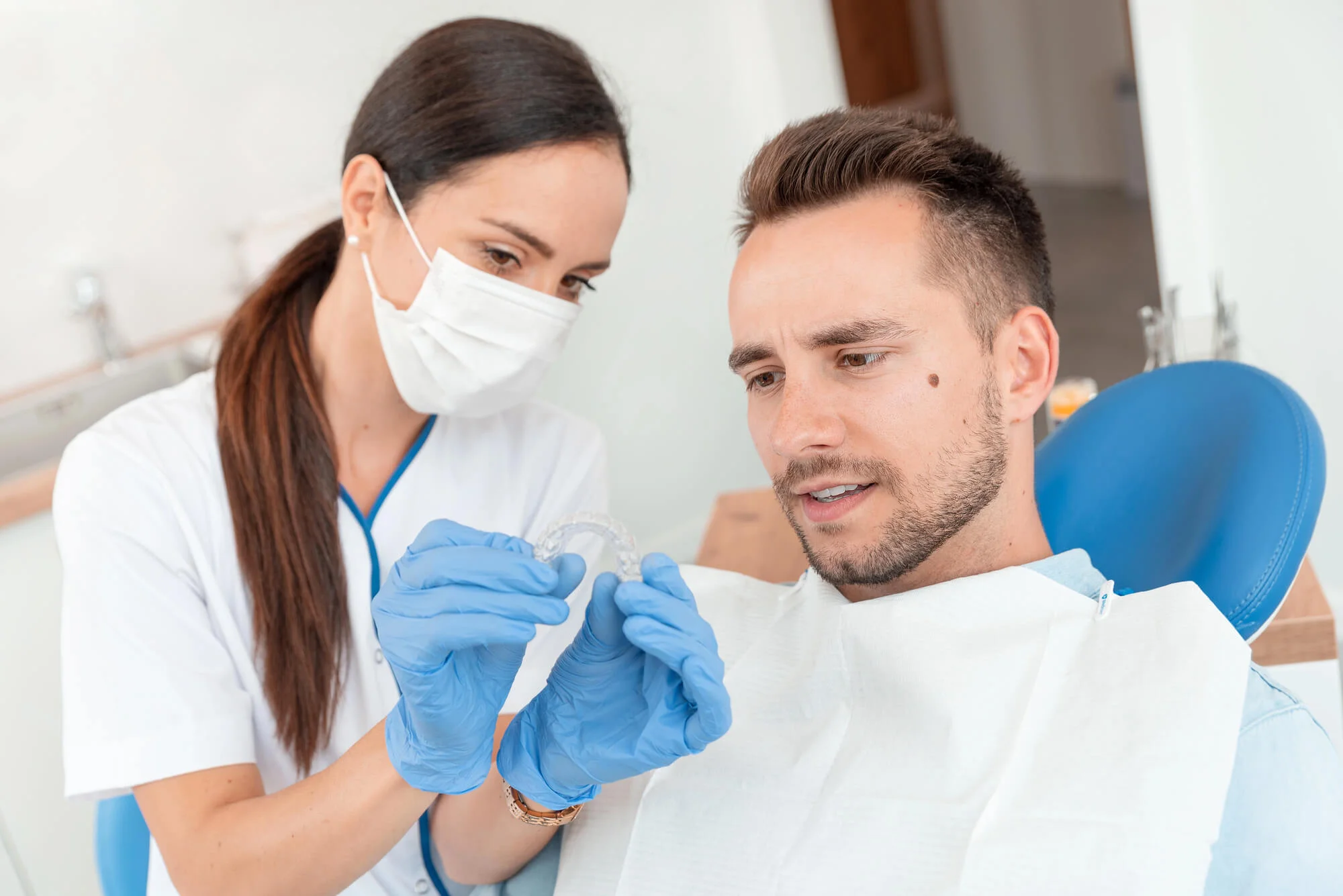
The team checks the fit and explains how to use, clean, and store the trays. Small tooth-colored attachments may be bonded to selected teeth to help guide movement.
Some plans call for interproximal reduction, which creates a very small amount of space between selected teeth. Your dentist will explain its purpose beforehand.
5. Progress Visits
Periodic visits allow your dentist to check your progress, fit, comfort, wear time, and oral hygiene. Additional scans or refinement aligners may be needed.
6. Retainers
Once the active sequence is complete, a retainer helps hold the new tooth positions.
Living With Invisalign
Wear the trays according to your dentist’s instructions, commonly around 20 to 22 hours per day. Take them out for meals and beverages other than plain water.
Brush before returning the trays whenever possible. Rinse and clean them as directed. Hot water can distort their shape, while strongly colored drinks may stain them.
Keep aligners in their case when not in your mouth. If one cracks or goes missing, contact the office rather than moving to another set without guidance.
Temporary pressure, tenderness, or minor speech changes may occur with a new set. Contact the office if a tray has a sharp edge, does not seat properly, or causes persistent discomfort.

How Long Does Invisalign Take?
The timeline depends on the starting position of your teeth, the complexity of the required movements, the number of aligners, and how consistently you wear them. An Invisalign plan may take several months to two years. Your dentist can provide a more specific estimate after examining your teeth and bite.
You may begin noticing changes before completing the full series, but visible improvement does not mean the planned movements are finished. Continue wearing each set and attending visits until your dentist confirms that active care is complete.
Invisalign Compared with Traditional Braces
Both approaches apply controlled force, but they differ in design and daily care. Aligners are transparent and removable, while braces remain attached to the teeth. Aligners simplify eating and oral hygiene, but their success depends heavily on daily wear. Braces may be more suitable for certain complex movements. Your dentist will consider your bite, tooth positions, oral health, and lifestyle.
Why Choose Dr. Milan for Invisalign in Birmingham, MI?
Dr. Milan approaches clear aligner care through the lens of cosmetic dentistry. Straightness is only one part of an attractive smile. Tooth proportions, symmetry, gum display, bite, facial features, and existing restorations can all influence planning.
He was an early Invisalign provider in Birmingham and has provided aligner care for hundreds of patients, including people whose careers place them in the public eye. His downtown practice combines digital planning with in-person monitoring throughout the aligner sequence.
Patients can also access broader cosmetic, restorative, and preventive services in the same office. If alignment is one part of a larger smile plan, Dr. Milan can discuss the timing of Invisalign in relation to services such as whitening, bonding, or porcelain veneers.
Frequently Asked Questions About Invisalign
Schedule an Invisalign Consultation in Birmingham, MI
If you want straighter teeth without the appearance of metal brackets and wires, Invisalign may offer an approach that fits your daily routine. At Birmingham Center for Cosmetic Dentistry, Dr. Milan evaluates your tooth alignment, bite, gum health, existing dental work, and cosmetic goals before recommending clear aligners. As an early Invisalign provider who has guided hundreds of patients through aligner care, he combines digital planning with attentive, in-person monitoring. Schedule a consultation to see how Invisalign may change your smile and what your personalized plan could involve.
*Invisalign®, the Invisalign logo, and iTero®, among others, are trademarks and/ or service marks of Align Technology, Inc. or one of its subsidiaries or affiliated companies and may be registered in the U.S. and/or other countries.